
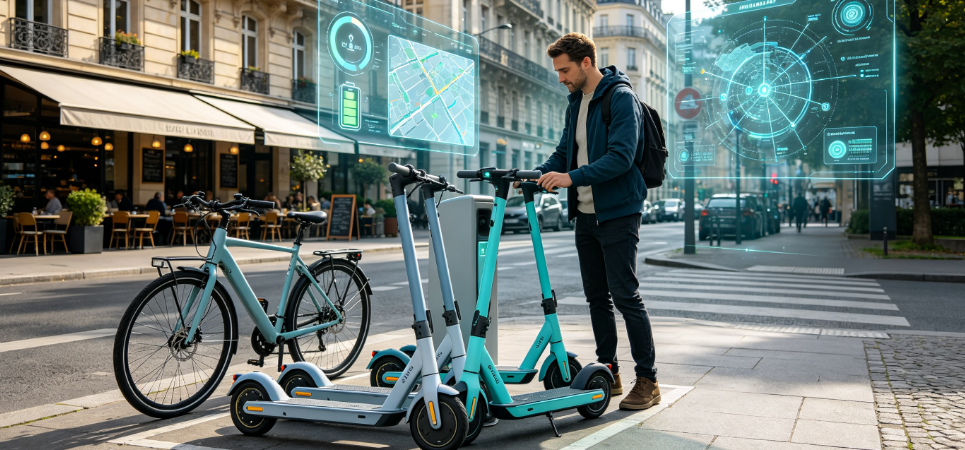
The Growth of Micro E-Mobility in Europe
Urban transportation is undergoing a major transformation.
Across Europe, cities are increasingly focusing on cleaner, quieter, and more efficient mobility solutions. This trend has accelerated the development of micro e-mobility, including electric bicycles, electric scooters, and other lightweight electric vehicles designed for short-distance transportation.
Unlike traditional vehicles, micro e-mobility solutions are closely connected with urban lifestyles.
They provide practical solutions for:
- Daily commuting
- Last-mile transportation
- Tourism and rental services
- Delivery applications
- Personal mobility
Countries across Europe are investing in cycling infrastructure, low-emission transportation policies, and sustainable mobility solutions.
Among European markets, Germany has become one of the most important markets due to its strong cycling culture, developed transportation infrastructure, and increasing demand for electric mobility products.
Germany: A Mature but Highly Regulated E-Mobility Market
Germany represents one of Europe’s largest markets for electric bicycles.
The popularity of e-bikes has grown significantly because they combine traditional cycling advantages with additional electric assistance.
For many German users, e-bikes are not simply recreational products.
They are becoming part of everyday transportation.
Common applications include:
- Commuting
- Urban transportation
- Mountain and trekking cycling
- Family transportation
- Professional delivery
However, the German market is also highly regulated.
For electric bicycles, regulations define requirements such as:
- Motor power limitations
- Maximum assisted speed
- Safety requirements
- Product compliance
Electric scooters are also regulated differently from e-bikes. In Germany, approved electric scooters must meet specific technical and legal requirements before being used on public roads.
This means European customers usually pay close attention to:
- Product reliability
- Safety
- Compliance
- Replacement availability
- Technical support
For component suppliers, understanding local market requirements is as important as manufacturing capability.
Why Electric Bicycles and Scooters Are Popular in Europe
The growth of micro e-mobility is supported by several long-term trends.
Environmental Awareness
European consumers increasingly consider low-carbon transportation options.
Electric bicycles and scooters provide an alternative for short-distance travel without relying on traditional fuel vehicles.
Urban Transportation Challenges
Many European cities face:
- Traffic congestion
- Limited parking space
- High transportation costs
Compact electric vehicles offer a practical solution for short urban journeys.
Aging Population and Lifestyle Changes
Electric assistance allows more people to continue cycling even when longer distances or physical limitations become challenges.
Tourism and Sharing Economy
Many European cities use electric bicycles and scooters for:
- Tourist transportation
- Rental services
- Urban mobility programs
These applications also create demand for maintenance and replacement parts.
Different European Countries Have Different Market Conditions
Although Europe shares many environmental goals, regulations and consumer preferences vary between countries.
Germany
Germany has a mature market with strong demand for:
- High-quality e-bikes
- Reliable components
- Long-term maintenance support
Customers generally focus on quality, safety, and compliance.
Netherlands
The Netherlands has one of the strongest cycling cultures in Europe.
Electric bicycles are widely accepted because cycling is already deeply integrated into daily life.
The market has strong demand for:
- Commuter e-bikes
- Cargo bikes
- Family transportation solutions
France
France has been actively promoting electric mobility through incentives and urban mobility programs.
Demand is growing for:
- Urban e-bikes
- Electric scooters
- Affordable mobility solutions
Southern Europe
Countries such as Spain and Italy have also shown increasing interest due to:
- Tourism
- Urban transportation needs
- Growing cycling communities
However, price sensitivity can be stronger in some markets.
Overall, Northern and Western Europe generally show stronger acceptance of higher-quality electric mobility products, while different countries may vary in regulations and purchasing preferences.
The Role of Chinese Supply Chains in European Micro E-Mobility
China has become an important manufacturing base for electric mobility products and components.
The reason is not only production cost.
China has developed a complete supply chain covering:
- Motors
- Controllers
- Battery systems
- Displays
- Chargers
- Wiring systems
- Electronic components
- Mechanical parts
For European brands and distributors, this ecosystem provides advantages in:
- Product customization
- Development speed
- Component availability
- Manufacturing flexibility
However, European customers usually do not simply look for the cheapest component.
They require:
- Stable quality
- Technical compatibility
- Reliable supply
- Documentation support
- Long-term cooperation
This is especially true for electronic components such as motor controllers.
Why E-Scooter and E-Bike Controllers Are Becoming Important Replacement Components
The controller is one of the key electronic components in electric mobility systems.
It manages communication between:
- Battery
- Motor
- Display
- Sensors
- Throttle
- Braking system
As electric bicycles and scooters become more widely used, the aftermarket demand for replacement components is also increasing.
Common reasons for controller replacement include:
- Electronic failure
- Water damage
- Performance upgrades
- Compatibility changes
- Product refurbishment
- Long-term maintenance
For repair shops and distributors, having access to compatible and customizable controllers can significantly improve after-sales service capability.
Customization Is Becoming More Important for European Customers
European e-mobility companies often face different requirements depending on:
- Country regulations
- Vehicle design
- Motor specifications
- Battery systems
- Customer usage scenarios
Therefore, a standard controller cannot always meet every application.
Customization may involve:
- Voltage configuration
- Current settings
- Communication protocols
- Connector design
- Firmware adjustment
- Compatibility with different motors
For European brands and repair networks, working with a flexible controller supplier can reduce development difficulties and improve after-sales support.
Chinese Opportunity and Challenges in European E-Mobility
Chinese suppliers have strong advantages in manufacturing capability and supply chain integration.
However, entering mature European markets requires more than production capacity.
Successful suppliers need to understand:
- European regulations
- Product reliability expectations
- Customer communication standards
- After-sales requirements
The future opportunity is not only exporting finished products.
It is providing:
- Customized components
- Technical cooperation
- Replacement solutions
- Flexible supply support
European companies bring strong brand recognition, market knowledge, and product design capabilities.
Chinese suppliers bring manufacturing experience, engineering flexibility, and supply chain efficiency.
Combining these strengths can create stronger mobility solutions.
Koramach: Supporting European Micro E-Mobility Supply Chains
With the growth of electric bicycles and scooters in Europe, component flexibility has become increasingly important.
Koramach works with manufacturing partners to provide customized electric scooter controller solutions for European customers.
Our focus is not only supplying standard products.
We support customers who need:
- Controller customization
- Different technical configurations
- Replacement solutions
- Supplier coordination
- Flexible production support
For e-bike brands, scooter distributors, and repair companies, a reliable component supply chain can help improve product maintenance and customer experience.
Conclusion
Micro e-mobility is becoming an important part of Europe’s future transportation landscape.
Germany and neighboring European markets continue to show strong demand for electric bicycles, scooters, and related components.
As the market develops, the importance of reliable electronic components and flexible supply chains will continue to increase.
The future competition will not only be about selling electric vehicles.
It will also depend on the ability to provide reliable components, customization capability, and long-term technical support.
By connecting European market needs with Chinese manufacturing advantages, suppliers and mobility companies can create more flexible and sustainable solutions for the next generation of urban transportation.